
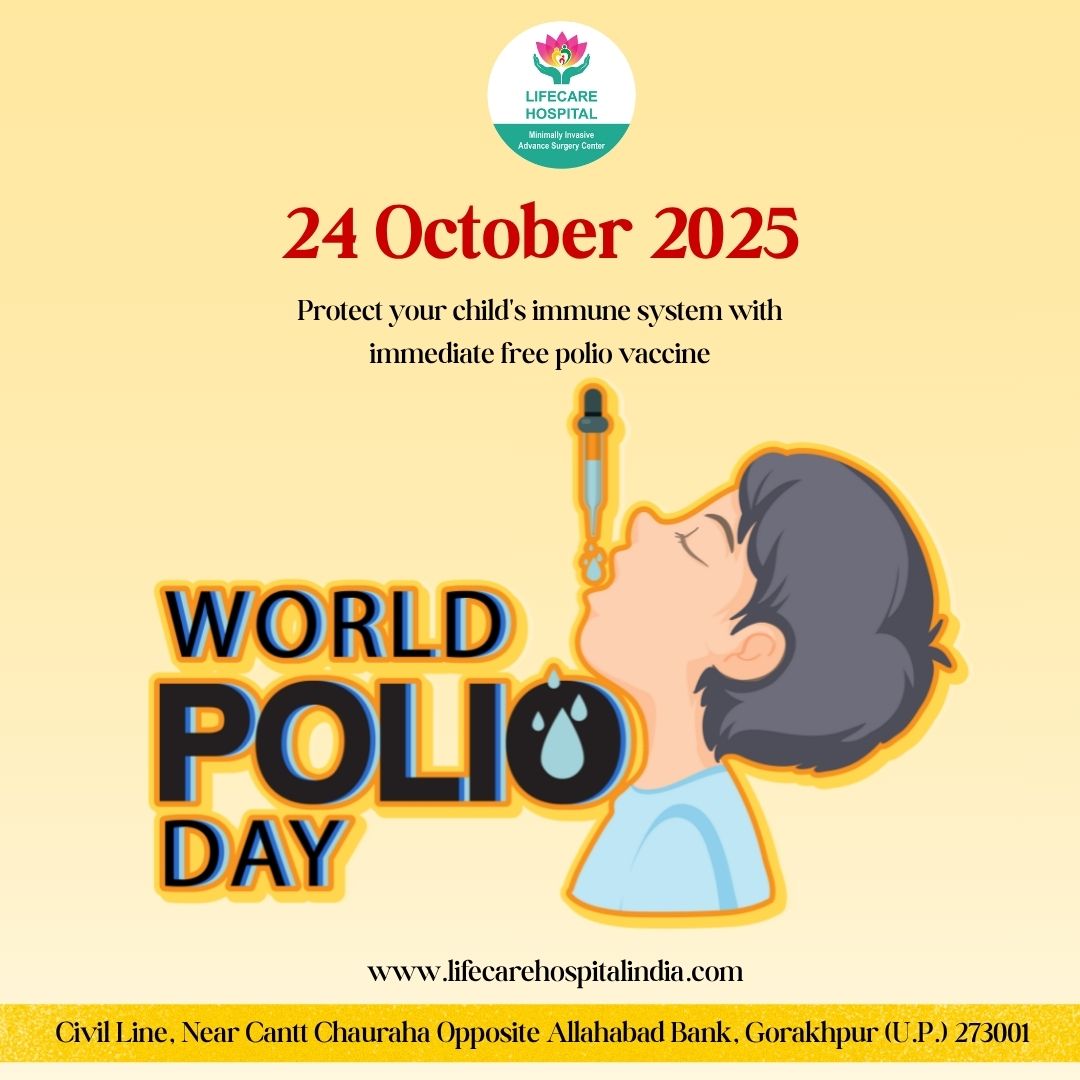
Date: 24 October
On World Polio Day (24 October) we raise awareness about polio prevention, celebrate progress, and recommit to vaccinating every child. Learn what polio is, how it spreads, how it’s prevented, and how our hospital is helping keep our community safe.
What is World Polio Day?
World Polio Day, observed every year on 24 October, is an international day of awareness dedicated to highlighting the ongoing fight to eradicate poliomyelitis (polio). It reminds communities, health workers, parents and policy makers that vaccination and vigilance can protect children from a disease that can cause irreversible paralysis.
What is polio?
Polio is a highly infectious viral disease that primarily affects children under five. The virus spreads person-to-person through contaminated food, water, or contact with infected faeces. In a small number of cases the virus attacks the nervous system and can cause permanent paralysis or even death.
Why prevention matters
Thanks to global vaccination efforts, polio cases have decreased by more than 99% since the 1980s. But the virus has not been erased everywhere — and where it remains, children are still at risk. High vaccination coverage in every community is essential to prevent outbreaks and protect future generations.
How polio is prevented
Polio vaccine — the single most powerful tool. Both oral polio vaccine (OPV) and inactivated polio vaccine (IPV) are used in different settings; your child’s doctor will advise which is appropriate.
Routine immunization — ensuring infants receive all recommended vaccine doses on schedule.
Campaigns and mop-ups — targeted vaccination drives to reach children who missed routine doses.
Hygiene and sanitation — clean water, safe food handling and handwashing reduce spread of many infectious diseases including polio.
Vaccine safety — clearing common concerns
Polio vaccines are extensively studied and monitored. Side effects are typically mild (for example, a sore arm or low-grade fever) and serious reactions are extremely rare. The risks of polio infection — permanent paralysis or death — are far greater than the tiny risks from vaccination.
How you can help
Ensure your child’s vaccinations are up to date. Ask your pediatrician or visit our immunization clinic for a vaccination card review.
If you missed a dose, don’t worry — catch-up schedules are available. Contact us and we’ll guide you.
Spread the message: encourage friends and family to vaccinate.
Volunteer or support local vaccination drives and awareness events.
For parents: what to expect at the vaccine visit
Bring your child’s immunization card and any previous medical records.
The nurse will check growth and health, then administer the vaccine.
You may be asked to wait briefly after vaccination so staff can monitor for any immediate reactions (rare).
You’ll receive documentation for your records and advice on the next dose (if needed).
Recent Comments