
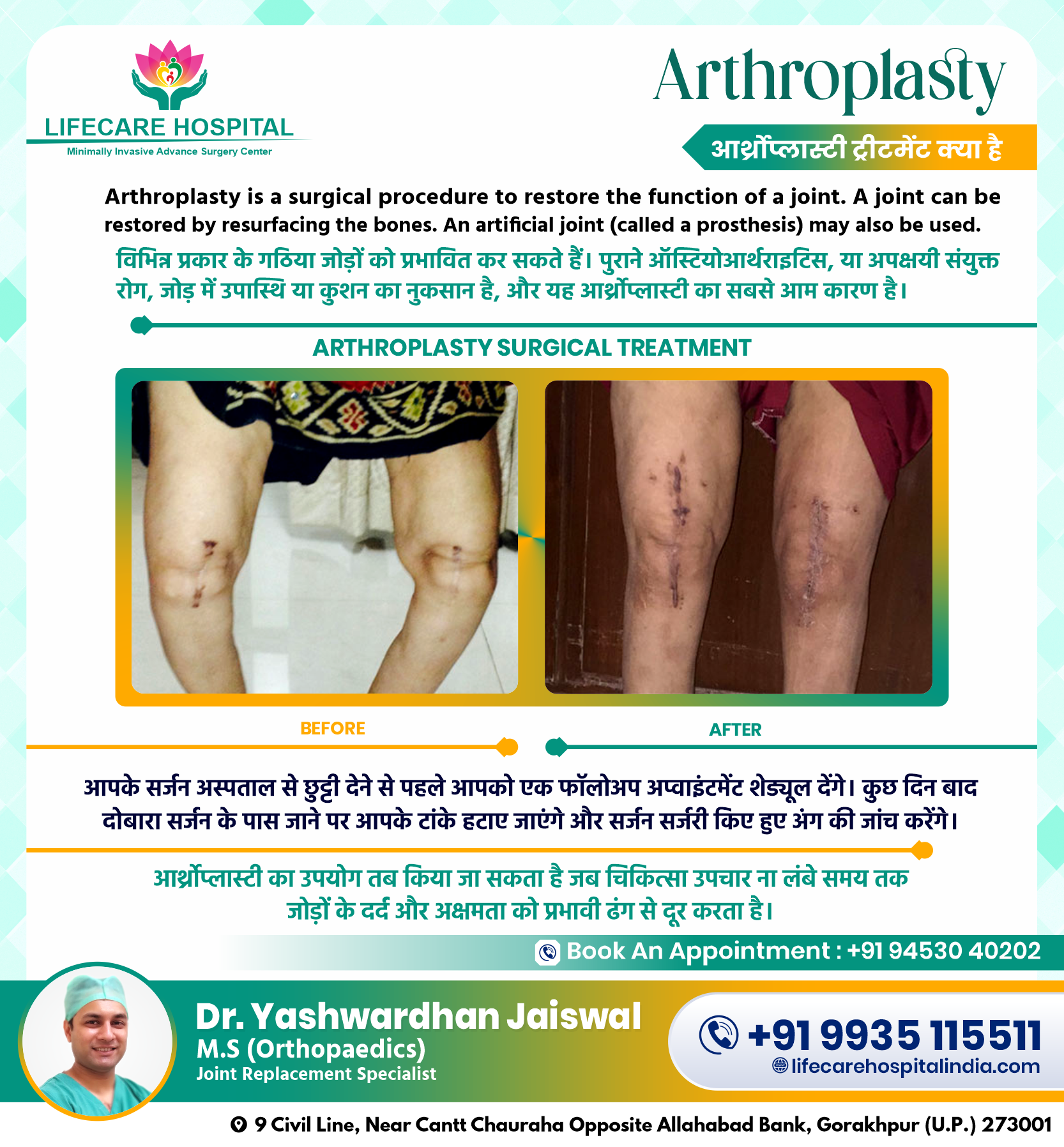
आर्थ्रोप्लास्टी ट्रीटमेंट क्या है
Arthroplasty is a surgical procedure to restore the function of a joint. A joint can be
restored by resurfacing the bones. An artificial joint (called a prosthesis) may also be used.
विभिन्न प्रकार के गठिया जोड़ों को प्रभावित कर सकते हैं। पुराने ऑस्टियोआर्थराइटिस, या अपक्षयी संयुक्त रोग, जोड़ में उपास्थि या कुशन का नुकसान है, और यह आर्थ्रोप्लास्टी का सबसे आम कारण है।
आपके सर्जन अस्पताल से छुट्टी देने से पहले आपको एक फॉलोअप अप्वाइंटमेंट शेड्यूल देंगे। कुछ दिन बाद दोबारा सर्जन के पास जाने पर आपके टांके हटाए जाएंगे और सर्जन सर्जरी किए हुए अंग की जांच करेंगे।
आर्थ्रोप्लास्टी का उपयोग तब किया जा सकता है जब चिकित्सा उपचार ना लंबे समय तक
जोड़ों के दर्द और अक्षमता को प्रभावी ढंग से दूर करता है।
Arthroplasty is surgery to replace all or some of a joint. Your surgeon will replace worn-out or damaged bone and cartilage in your natural joint with a prosthetic implant. It usually takes at least a few months to recover after an arthroplasty.
- Blood loss.
- Thromboembolism.
- Peroneal nerve palsy.
- Tourniquet-related ischemic injury.
- Arterial injury.
- Wound healing problems.
- Surgical site infection.
- Intraoperative fracture.
Arthroplasty comes from two Greek words — “arthro” means joint, and “plasty” refers to the process of molding or forming. In modern medical terms, arthroplasty refers to the surgical reconstruction or replacement of a joint. In other words, arthroplasty is the same thing as joint replacement surgery.
Arthroplasty is a surgical procedure that can help to restore joint function by replacing some or all of the joint with artificial parts (called prostheses ). Arthroplasty is essentially another name for a joint replacement.
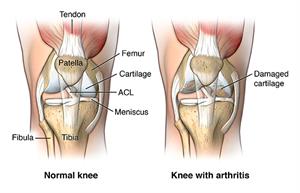
Generally, total knee arthroplasty (TKA) is performed for destruction of joint cartilage either from osteoarthritis, rheumatoid arthritis/inflammatory arthritis, posttraumatic degenerative joint disease, or osteonecrosis/joint collapse with cartilage destruction.

Recent Comments