
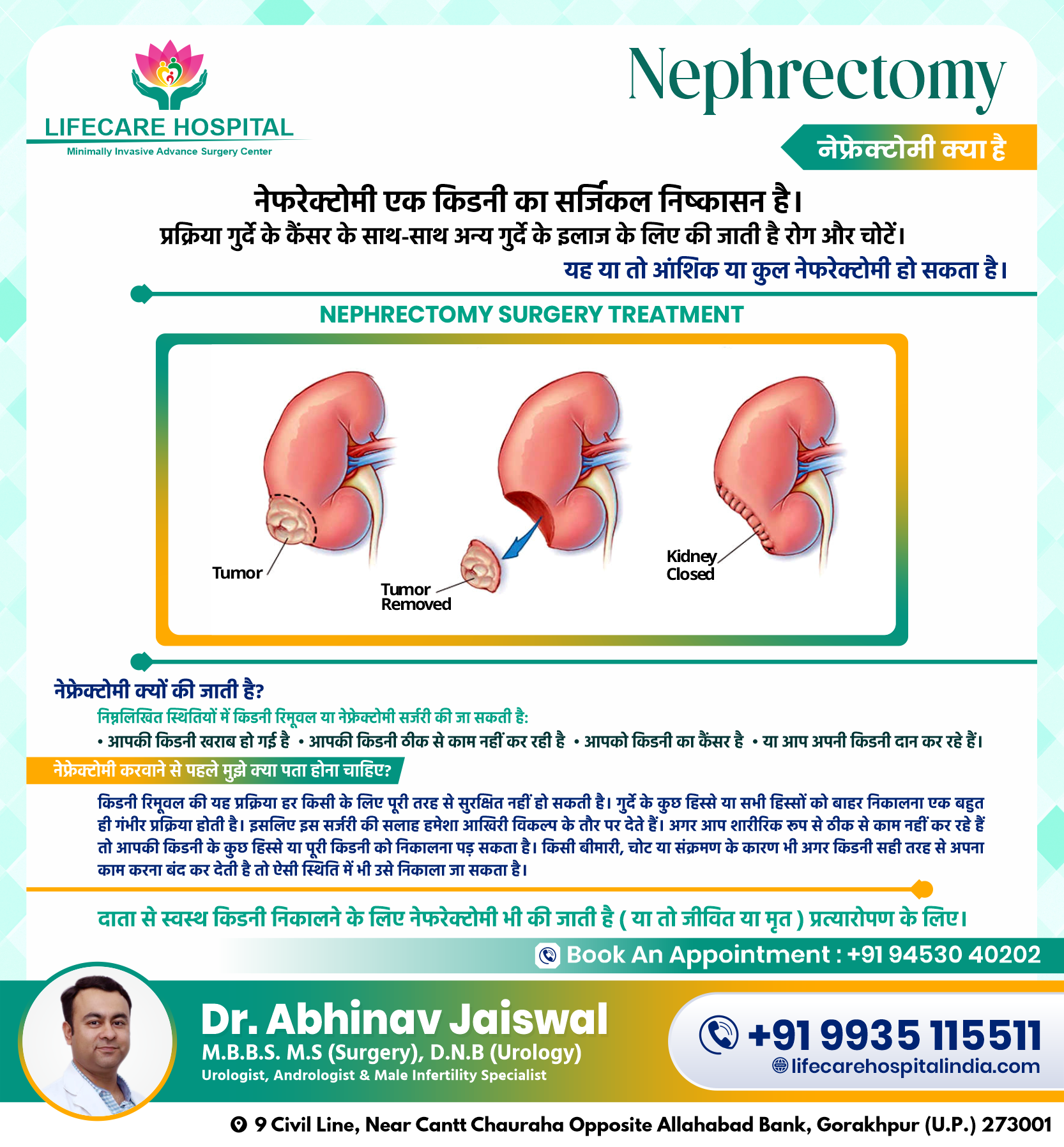
नेफ्रेक्टोमी क्या है
नेफरेक्टोमी एक किडनी का सर्जिकल निष्कासन है।
प्रक्रिया गुर्दे के कैंसर के साथ-साथ अन्य गुर्दे के इलाज के लिए की जाती है रोग और चोटें।
यह या तो आंशिक या कुल नेफरेक्टोमी हो सकता है।
नेफ्रेक्टोमी क्यों की जाती है?
निम्नलिखित स्थितियों में किडनी रिमूवल या नेफ्रेक्टोमी सर्जरी की जा सकती है:
• आपकी किडनी खराब हो गई है
• आपकी किडनी ठीक से काम नहीं कर रही है
• आपको किडनी का कैंसर है
• या आप अपनी किडनी दान कर रहे हैं।
नेफ्रेक्टोमी करवाने से पहले मुझे क्या पता होना चाहिए?
किडनी रिमूवल की यह प्रक्रिया हर किसी के लिए पूरी तरह से सुरक्षित नहीं हो सकती है। गुर्दे के कुछ हिस्से या सभी हिस्सों को बाहर निकालना एक बहुत ही गंभीर प्रक्रिया होती है। इसलिए इस सर्जरी की सलाह हमेशा आखिरी विकल्प के तौर पर देते हैं। अगर आप शारीरिक रूप से ठीक से काम नहीं कर रहे हैं तो आपकी किडनी के कुछ हिस्से या पूरी किडनी को निकालना पड़ सकता है। किसी बीमारी, चोट या संक्रमण के कारण भी अगर किडनी सही तरह से अपना काम करना बंद कर देती है तो ऐसी स्थिति में भी उसे निकाला जा सकता है।
दाता से स्वस्थ किडनी निकालने के लिए नेफरेक्टोमी भी की जाती है ( या तो जीवित या मृत ) प्रत्यारोपण के लिए।
A radical nephrectomy is major surgery. But if your cancer hasn’t spread, you may not need any more treatment. Your doctor will continue to monitor you carefully.
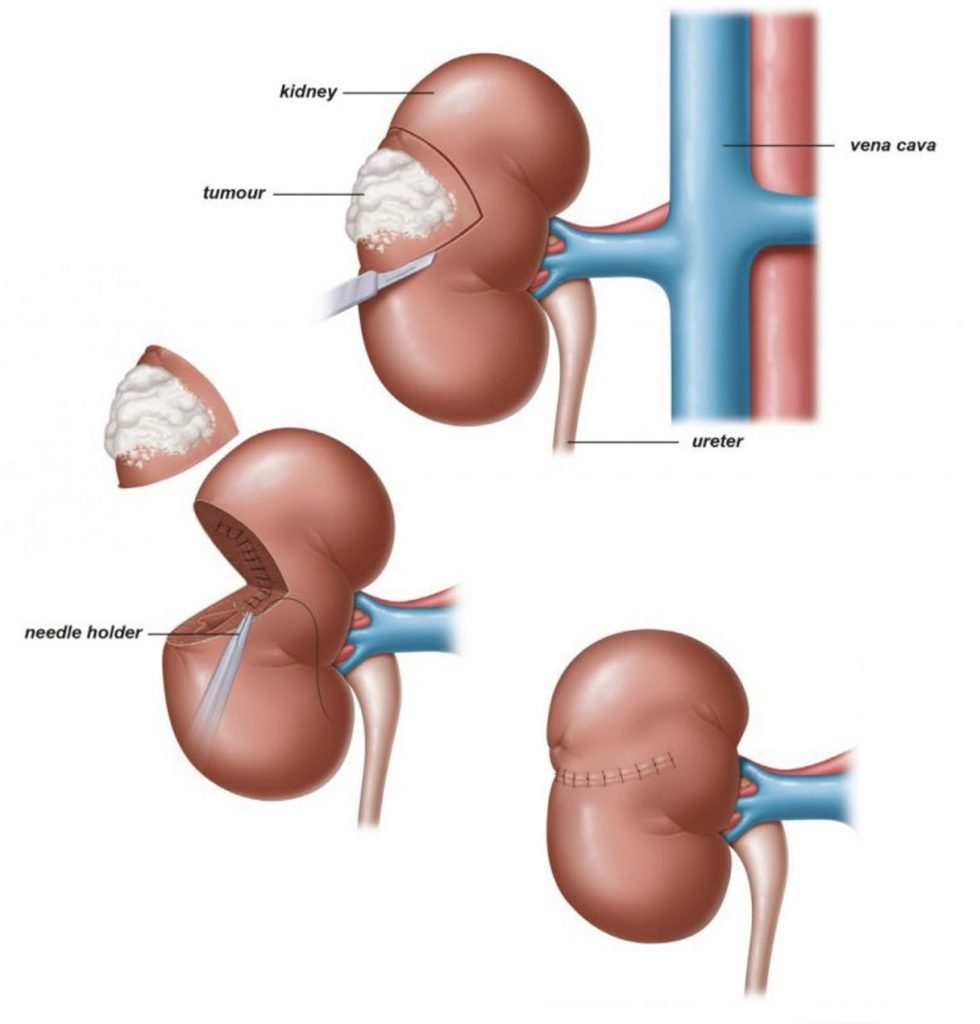
Nephrectomy (nuh-FREK-tuh-me) is a surgery to remove all or part of a kidney. Most often, it’s done to treat kidney cancer or to remove a tumor that isn’t cancerous. The doctor who does the surgery is called a urologic surgeon.
Your belly will feel sore after the surgery. This usually lasts about 1 to 2 weeks. Your doctor will give you pain medicine for this. You may also have other symptoms such as nausea, diarrhea, constipation, gas, or a headache.
Patients invariably ask their doctors what to eat to protect the remaining kidney. However, the effect of dietary approaches, such as a low-protein and low-salt diet, for lowering the risk of CKD and ESRD have not been studied in a controlled clinical trial.
If you have a solitary kidney, you do not need to eat a special diet. However, you can keep your kidneys healthy by staying well hydrated, not taking too much salt, and not gaining excessive weight. If you have reduced kidney function, you may need to make changes to your diet to slow your kidney disease progression.
A Foley catheter is inserted and then the patient is placed in a lateral decubitus position, 90-degree to the table. The side to be operated upon should be kept up. The patient should be placed at the edge of the operating table so that the surgeon does not face any restriction of movement of the instruments.

Recent Comments