

रिट्रोग्रेड इंट्रारिनल सर्जरी (आरआईआरएस) क्या है ?
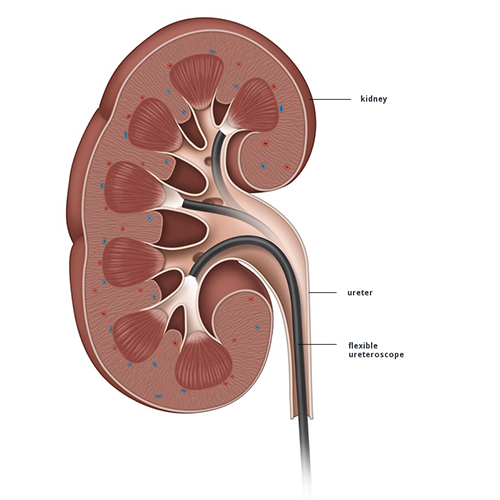
आरआईआरएस (रेट्रोग्रेड इंट्रारेनल सर्जरी) ट्यूब देखने की विधि है जिसे फाइबरऑप्टिक एंडोस्कोप के रूप में जाना जाता है जिसे सर्जरी के दौरान किडनी तक पहुंचाया जाता है। फाइबर ऑप्टिक लचीला होता है जिससे वृक्क प्रणाली के साथ झुकना आसान हो जाता है और यह आसानी से गुर्दे और मूत्रवाहिनी में जा सकता है।ट्यूब को मूत्रवाहिनी में उस हिस्से तक ले जाया जाता है जो मूत्र एकत्र करता है और फिर यह गुर्दे के विभिन्न हिस्सों को देखने में मदद करता है। उसके बाद, पतले लेजर फाइबर को स्टोन और स्कोप के माध्यम से पारित किया जाता है, जिसे बहुत छोटे कणों में पाउडर किया जाता है, जिससे मूत्र या खारा सिंचाई के माध्यम से धोना आसान हो जाता है।उपचार का सबसे अच्छा हिस्सा यह है कि किसी चीरे की आवश्यकता नहीं होती है और रोगी को स्थानीय या सामान्य संज्ञाहरण दिया जाता है। हमारे विशेषज्ञ मूत्र रोग विशेषज्ञ आपको सर्वोत्तम उपचार देने के लिए सर्जरी करेंगे।
आरआईआरएस से किसे लाभ मिल सकता है?
बिना किसी बाहरी कट के किडनी के अंदर प्रदर्शन करने के लिए सर्जरी की आवश्यकता होती है। उपकरण को ऊपर और मूत्रमार्ग के माध्यम से ले जाया जाता है, और फिर एक जीवित एक्स-रे यानीफ्लोरोस्कोपी की मदद से गुर्दे में रखा जाता है। प्रक्रिया न्यूनतम इनवेसिव है
RIRS is a minimally invasive procedure to remove the stones from the kidneys; during the surgery, a type of viewing tube known as a fiberoptic endoscope that is passed through the kidney. Because the fibre-optic is flexible, it may readily bend within the renal system and can easily enter the kidney and ureter.
In general, RIRS Surgery takes 1 to 2 hours to complete. However, the duration of the surgery can vary based on several factors including the size and number of stones, location of the stone, age and overall health of the patient, the total experience of the urologist, etc.
In conclusion, the positive correlation identified between the serum MIOX and creatinine levels indicate that MIOX also provides information about kidney functions similar to creatinine. In addition, RIRS is a safe treatment procedure with no negative effect on the kidneys.
RIRS is a longer procedure than PCNL. Haemoglobin levels are less likely to drop after RIRS as compared to PCNL. RIRS is best to use for stones lesser than 2 cm in size in morbidly obese patients, patients with musculoskeletal deformities, bleeding diatheses, and in cases of unsuccessful ESWL treatment previously
Hospital Stay: RIRS is usually an outpatient procedure, and patients can return home the same day. In some cases, an overnight hospital stay may be recommended. 2. Recovery Time: Recovery following RIRS is relatively quick, with most patients returning to normal activities within a few days to a couple of weeks.
Recent Comments